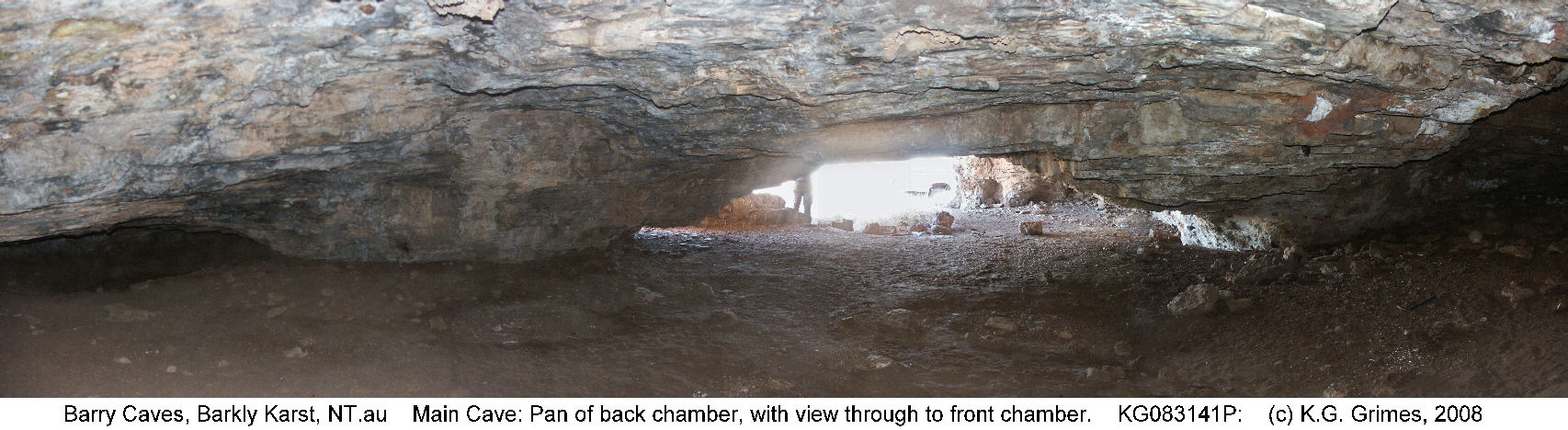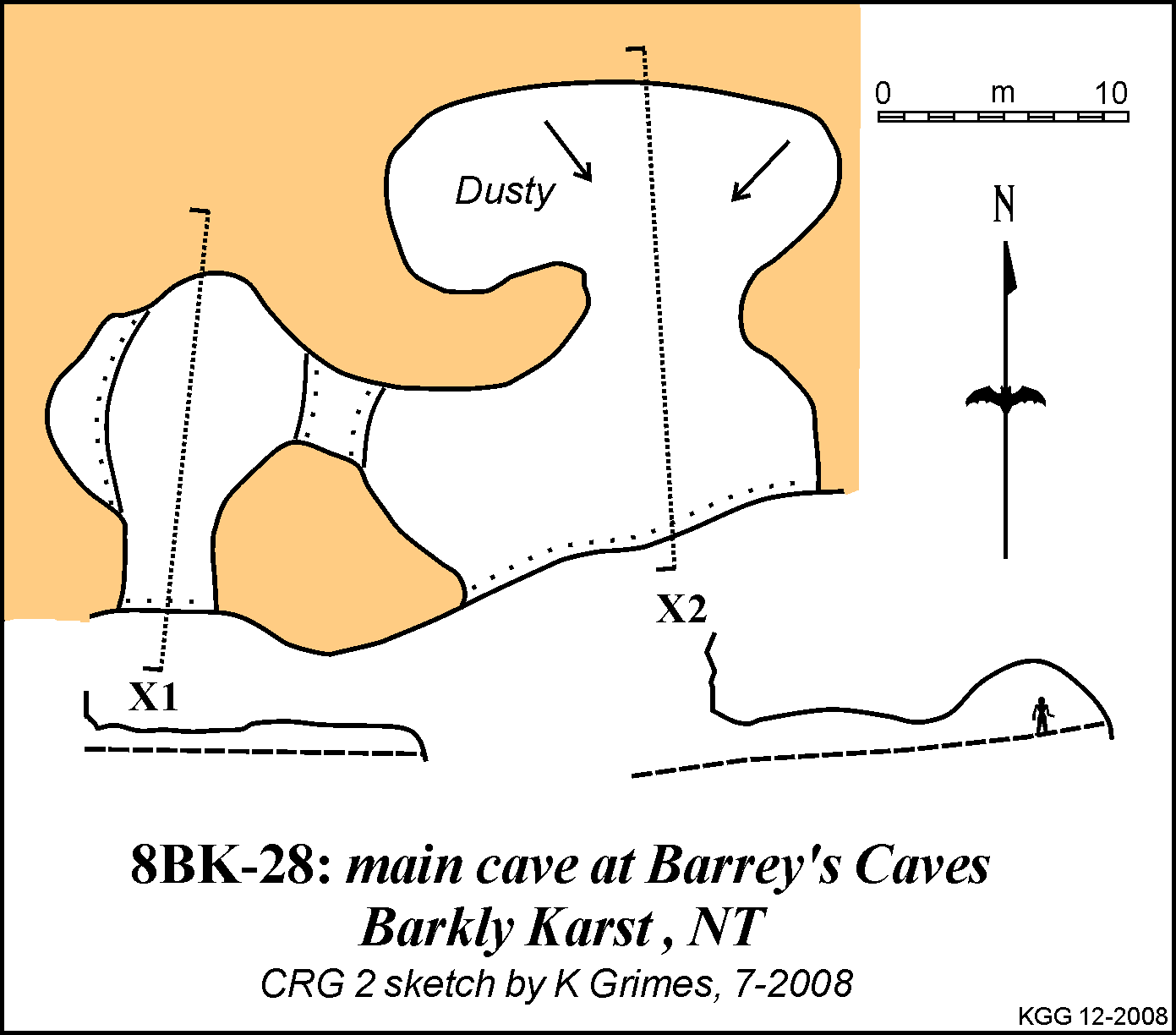
BarryCavesMap.png
Caves in laterite karst are generally NOT the result of solution alone. In many cases they form in the soft mottled or pallid zone beneath a hard duricrust cap. The soft material has been removed by piping, wind or other mechanical processes. Tafoni are a related phenomenon, but are not restricted to laterite or DWPs.
For an example, with map, of a low maze cave beneath a laterite cap, see Lefroy, T., & Lake, P., 1972: A laterite cave in the Upper Chittering Region, Western Australia. The Western Caver, 12(3): 68-77.
See also photos of possible solutional caves in sandstone at Lawn Hill Gorge, NW Qld. But those are not assocuated with a DWP.
|
|
Map of a cave in weathered sandstone beneath a silicified duricrust, Barrey Caves, near the Barkly Highway, NT. See photo below.
BarryCavesMap.png |
|
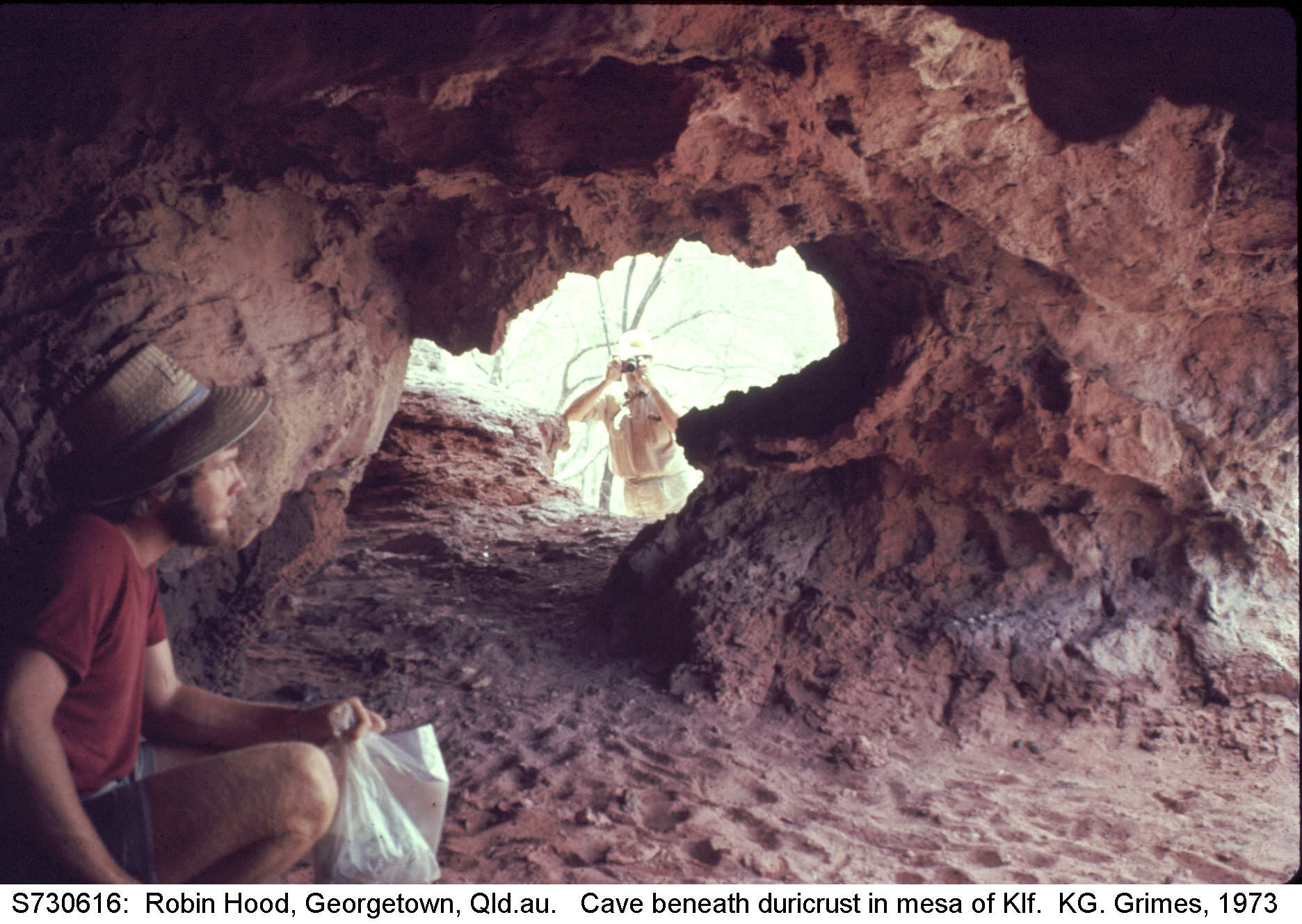
Cave (rock shelter) in a DWP beneath a duricrust. Georgetown area, Qld.
S730616.jpg |

|
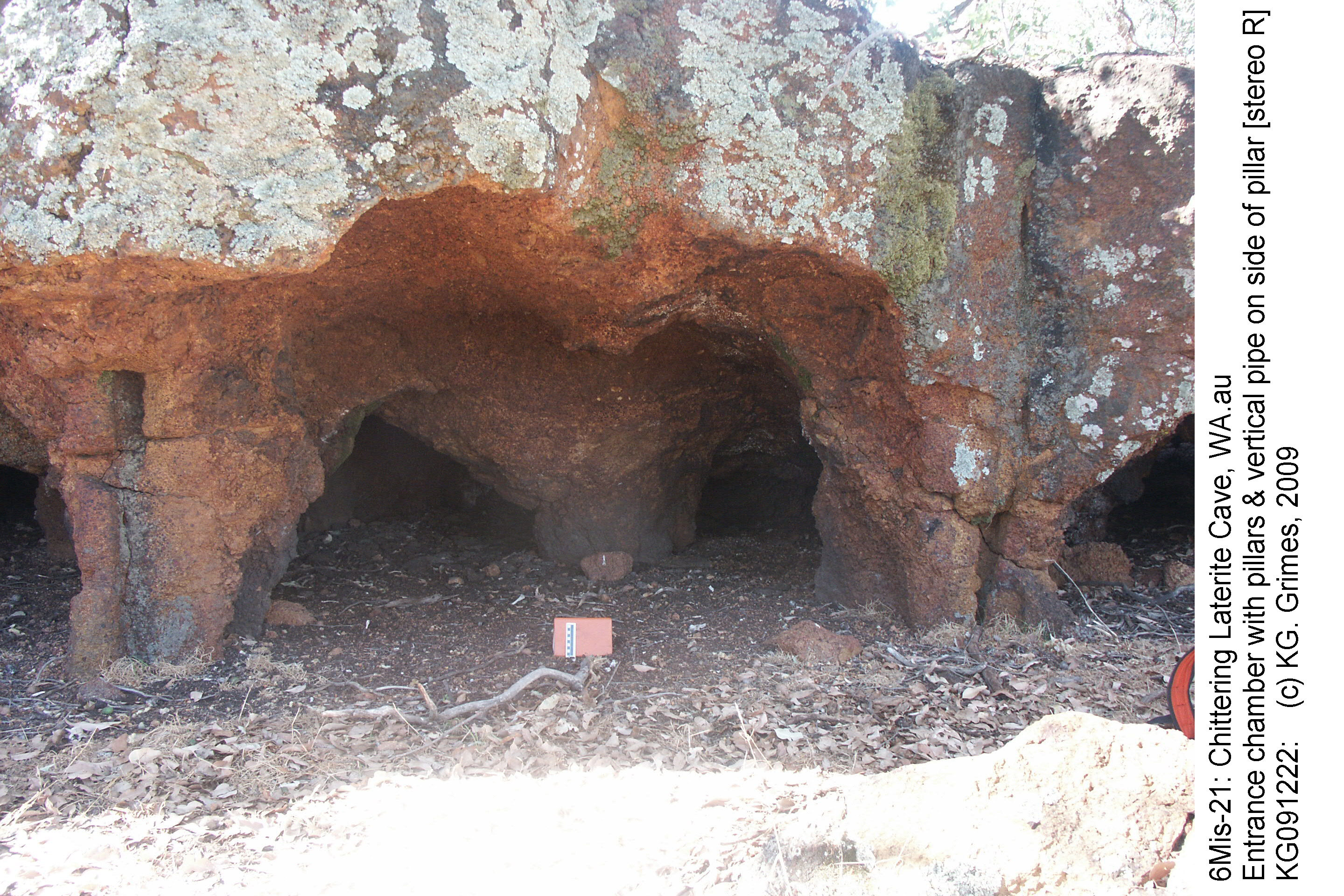
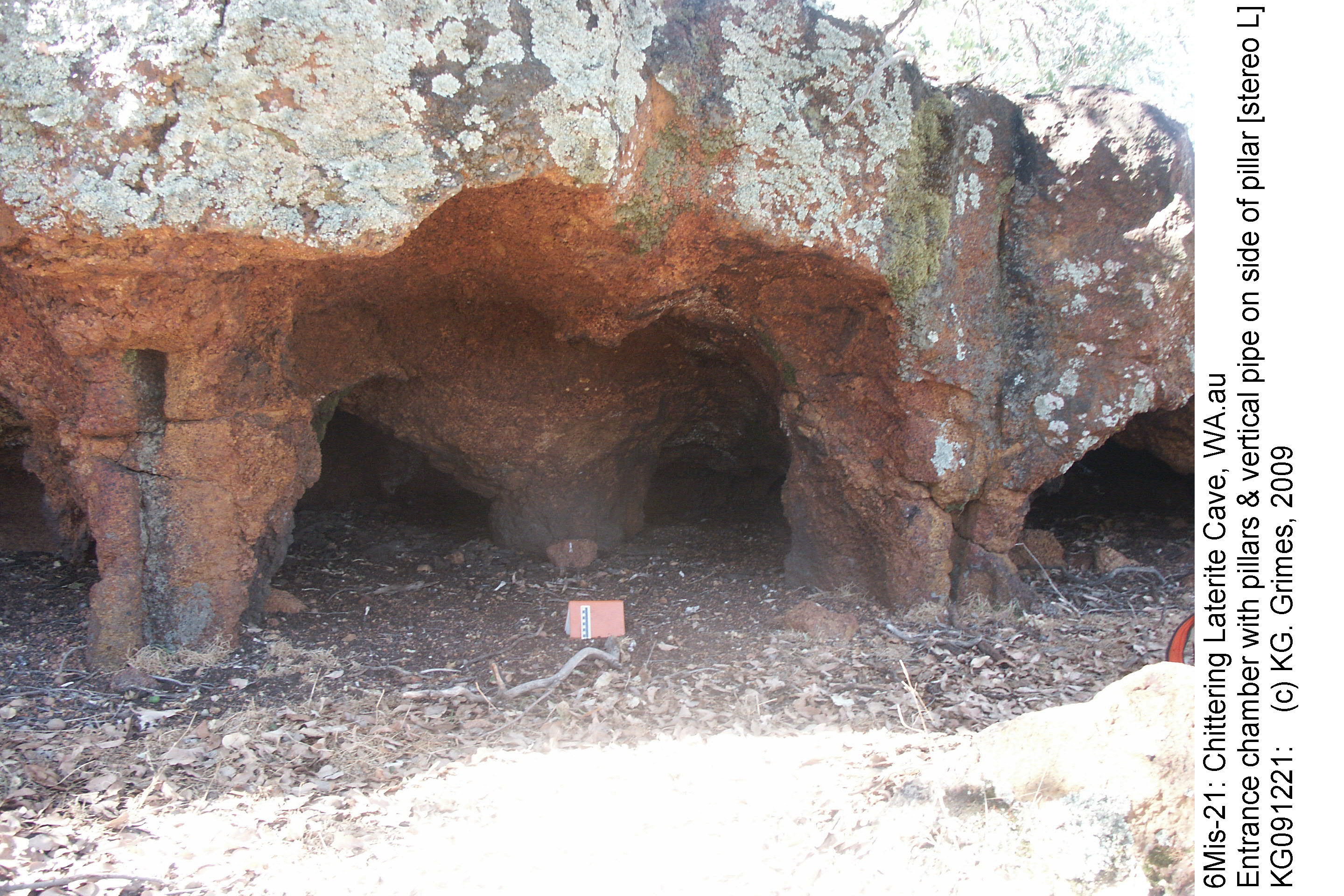
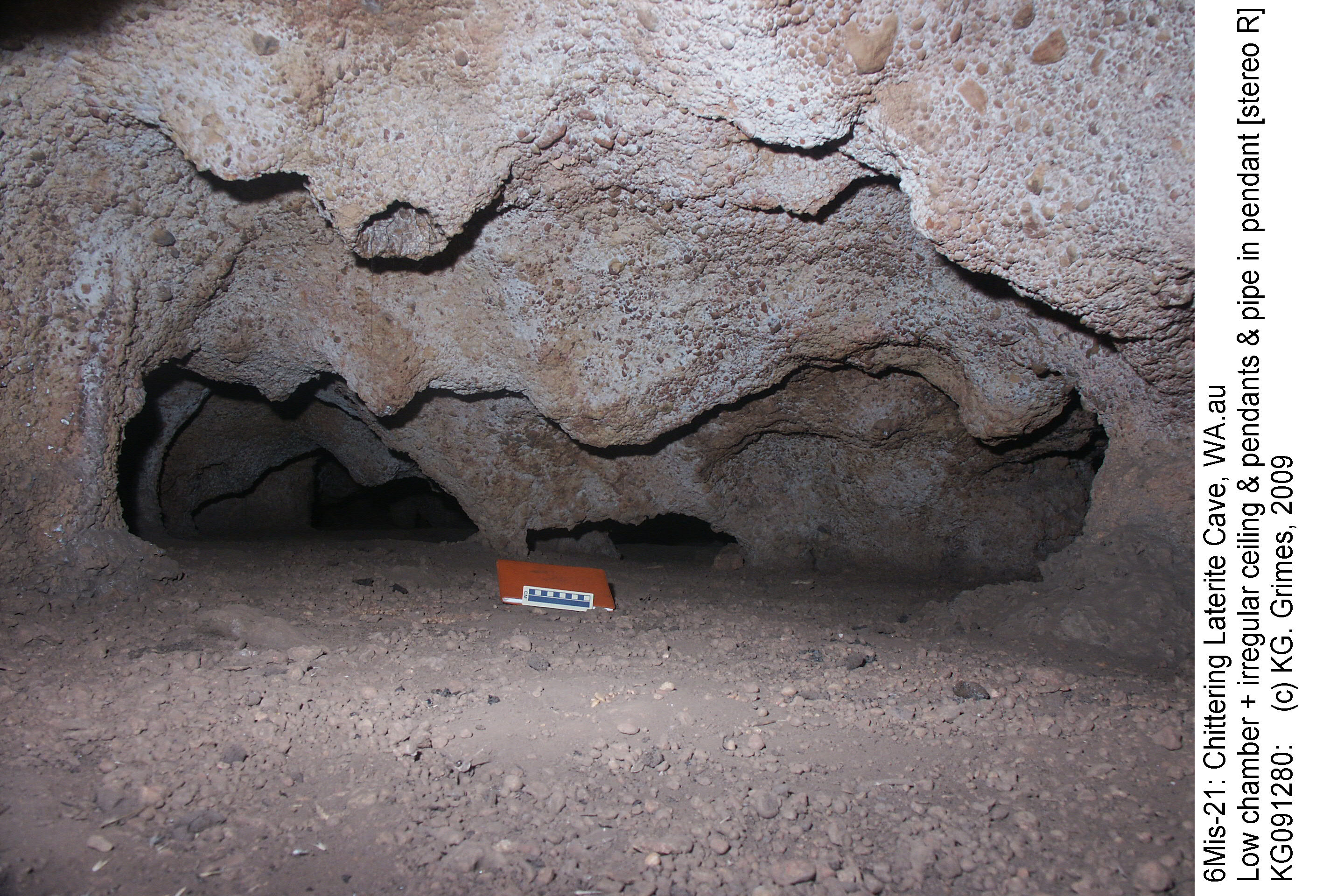
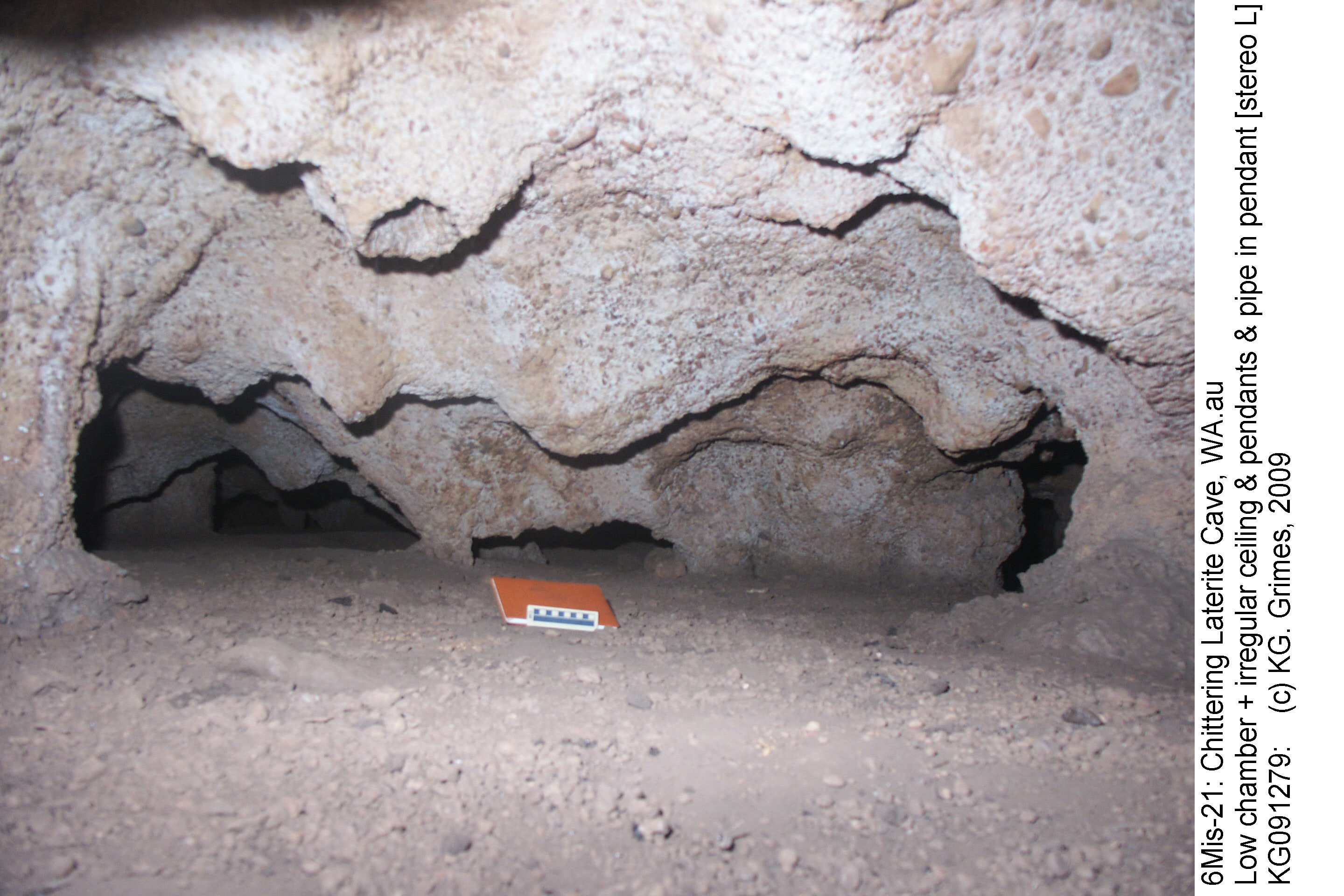
The cave at Chittering, WA, is a low crawly horizontal maze in soft lateritic material beneath a ferricrete crust. It probably formed by piping of the soft matrial from beneath the resistant cap. See Lefroy, T., & Lake, P., 1972: ChitteringMap.png |
|
|
Entrance to the Chittering laterite cave, showing duricrust cap and pillars. The left hand pillar has a small, vertical, cylindrical solution pipe exposed in its side. Notebook is 18 x 12 cm. Stereo-pair, view cross-eyed. KG091222a.JPG & KG091221a.JPG |
|
|
Inside the Chittering cave. Note roof pendants, and the small solution pipe within the core of one pendant. Notebook is 18 x 12 cm. Stereo-pair, view cross-eyed. KG091280.JPG & KG091279.JPG |